It Isn't all About Me
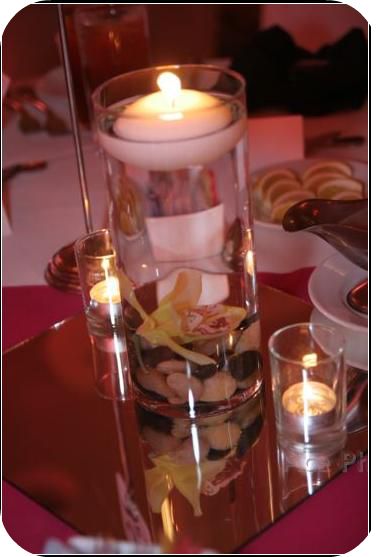
We know that the bride and the groom are the focus of this wonderful day. Their wedding and its celebration are momentous and compelling both for the couple and their families. But we have learned that the most remembered wedding are those focus on celebrating and consider that family and friends who will join in celebrating this event. Gleaned from scores of weddings, here are some ideas you can consider when you focus on your family and guest. Remember to treat your attendants like the friends they are - not like servants. As you select items for your gift registry, include items to fit everyone's budget. Select reception food tht most guest will like and enjoy. (This is not the day to serve liver and onions no matter how much you personally like it.) As you select table centerpieces, keep them at a scale that will allow guest at each table to see the people across the table. If you plan music during the dinner, keep it soft so people can hear themselves talk. And if you have dancing, make sure that some "golden oldies" are included so parents and their friends feel comfortable dancing too.


Avoid micromanaging everything. Let vendors do what they do best. Make it a point to personally greet as many guests as possible. For everyone's sake, try to limit the break between the ceremony and reception to no more than 2 hours. If locations or arrangements make this impossible, try to arrange something for guests to do in the interim. No one wants to go home and come back again. Think about everything you can do to make your wedding reception memorable for your guests as well as yourself. Remember that this is one of the biggest parties you and your family will ever give.
Elaine Roberts
Wedding Stress

Now that you are engaged, we know that stress can set in as you try to deal with the myriad of details that threaten to engulf you.

You have a number of decisions to make about ceremony and reception locations, the date, what to wear, who to ask to be your attendants, whom to invite, what flowers, music and photographers to select. There are budget questions to solve. All these choices can generate a case of "wedding jitters."

To relieve your stress or make it manageable, remember these key points.

If the stress is generated by money issues, take the time, as a couple to determine your priorities. List the things that are most important to you both. Determine the top five items from a list of 10 to 20. These five - listed in priority order, are the items on which you are least likely to compromise. Then, as you review your budget, you can "borrow" from other items on you list to keep the budget in balance.

If the stress is coming from family, be clear about the source and be firm about communicating your feelings. Talk out the issues you see with parents, friends and those involved. Be gracious but firm about expressing your views and concerns.

Don't just "stuff" the feeling so that they end up ruining a friendship.

If the stress is coming from the crush of events and the sense of being overwhelmed by everything you sense much be done, the key is to SHARE the responsibilities.

Hire a wedding planner, enlist the groom, ask your parents to take over specific jobs. Get yourself a wedding planning book and be faithful in entering plans made and following its suggestions for organizing your projects.

Get enough sleep, and take care of your health by eating well. Make good use of your gym membership and exercise away the stress.  Read more about reducing wedding stress. 

When it all seems too much, come speak with me, an experience consultant, who can help you put it all in perspective and remind you of what is truly important in this wedding.

"stress"Elaine Roberts
Children at Your Wedding

While some brides prefer an adult only reception, other brides want to include children at their wedding ceremony and reception as guest. If that if true for you, know that children can add an extra dimension to the festivities and can be a delight if you make plans to incorporate their interests.  You will be inviting chaos if you expect children to behave like adults. 

If you are planning to include children at your reception, be sure to let the parents know that children are invited and to do so, include their names on the inner envelopes of the invitation. In fact, some brides send a special reception invitation to children.

To entertain the children, set up a special reception area. Include an arts and a crafts room with crayons, markers, glitter and glue. Be sure to provide smocks or aprons to protect their clothing and hire a college student or young adult to supervise the activities. They could/should make cards for the bride and groom. 

Plan a box lunch menu or a kid friendly buffet. Suckers, anchored with pebbles in terra cotta pots, make good centerpieces.

After the craft project and the food, provide a TV with age appropriate videos or if space permits, take the children outside to play with bubbles or other outdoor activities.  Parents may wish to include their children in a portion of the wedding dance segment. If this is an evening wedding with a dance, you may also wish to be sure the children's area has cots or sleeping bags available for children who may be there through the evening hours.

Children can have a good time and free their parents to participate if you spend some time creating a special area and activities especially for them.

Get more ideas for keeping children entertained at your wedding.

Who do I Tip?

This is one of the questions brides often ask. For this party (your wedding celebration) there are many people involved in providing service to you and your guests. You may not have much experience in working with some of them, but feel fairly comfortable dealing with others. BRIDE’S magazine offers the following guidelines – understanding that local customs may trump these suggestions. But it is important to consider these expenses when putting together your budget. Remember to check your contracts to see if gratuity is already included.

View the cheatsheet 

Tips:

Caterer or venue manager – 15% of total food and drink bill unless it is already included in the contract.

Reception Musicians or DJ’s - $25 - $50 each

Limo Drivers - 15% of the total bill

Hair & Makeup – 15% of the total bill

Delivery Staff (optional) - $10 - $20

Clergy - $50 - $200 donation (depending on arrangements/payments made)

Custom says that you don’t have to tip the following however you may wish to tip or give a gift: Florist, Photographer, Videographer, Baker, Stationer,

Congrats Adam and Charlotte

A beautiful wedding at the Country Music Hall of Fame.  This wedding was filled with family and friends.  The ceremony was held in the Rotunda with the reception in the Conservatory.

The wedding partied into the night with the bride and groom leaving on a rickshaw.  How awesome!

bride and groom at night in downtown Nashville

Great photo in downtown Nashville after the wedding...

chocolate brides cake with flowers

How many times to do you see a chocolate iced cake?

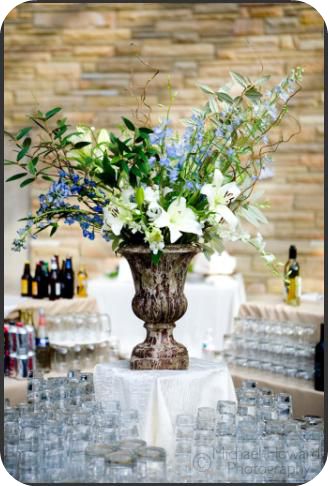
large vases near bar at reception

Fabulous florals and centerpieces

wedding reception in the conservatory at Country Music Hall of Fame
bridal party photos in the museum at Country Music Hall of Fame

Wedding photos in the museum

bride and groom sharing a dance at night

 Beautiful photo in the courtyard....

Photos by Howard Photo

Venue - Country Music Hall of Fame

Cake - Nashville Cakes

Videographer - Total Scene

Music - Wedding Musicians Company

- City Lights Band

Lighting - TechWorks

Hair & Makeup - Hair Mafia

Flowers - Chase Rivers

Wedding Traditions - Folklore and Superstitions

The History Behind our Traditions

Wedding Ring

A circular shape symbolizes eternity. A wedding band symbolizes eternal love by their lack of a beginning or an end. The Roman's believed that the third finger of the left hand runs directly to the heart.  The ring allowed them to posses each other's hearts. 

White Gown

White is the ceremonial symbol of purity and virtue. However, this is a relatively new tradition started in 1840 when Queen Victoria work a white dress to her wedding.  Before that any color was acceptable. The Celtics preferred red for fertility, while in biblical times blue was considered pure.  Since many women were married in their "Sunday Best" gray, black, and brown were practical colors. 

Bouquet and Flowers

The carrying of flowers by the bride has its roots in ancient times when it was believed that strong smelling herbs and spices would ward off and drive away evil spirits, bad luck and ill health. They are included as symbols of life, growth, and fertility. Flowers with different meanings were carefully selected and assembled into a bouquet as well herbs. Grooms wear boutonnieres in the tradition of knights wearing the colors of his lady love. 

Something Old, Something New, Something Borrowed, Something Blue, and a Sixthpence in her shoe

Something Old represents continuity, the link with the bride's family, and the past.

Something New represents good fortune and success in the bride's new life, optimism and hope

Something Borrowed is to remind the bride that friends and family will be there for her when help is needed.  When the something borrowed comes from a happily married woman it is thought to lend some of the happiness and fortune to the new bride. 

Something Blue symbolizes of faithfulness, fidelity,  and loyalty and dates back to biblical times when blue represented purity, fidelity

A Silver Sixpence in her Shoe is to wish the bride wealth both financial and happiness, a life of fortune (A penny is now substituted)

Rice


Rice was thrown at the bride and groom to encourage fertility. Before rice became so popular wheat, corn, oats and grain were used.  Of course, birdseed and flowers petals are now substituted for rice. 

Bridal party and Ceremony Positions

The bride stands on the left of the groom during the marriage ceremony to allow his sword arm to be free ready to fight off other men who may want her as their bride.

Best men used to be chosen based on their skill with a sword and their ability to be an armed guard. 

Bridesmaid traditionally wore attire similar to the bride so that bad spirits or other men would find it harder to spot the bride. 

Carrying over the threshold

Carrying the bride over the threshold protects her from any evil spirits that may be lurking in the new home.  This belief is rooted in many traditions around the globe. 

10 Things Your Officiant Wished You Knew

I thought I would give you some insight from some of the many officiants and ministers that I have worked with. 

Traditionally all weddings were held in churches.  Now, more and more weddings are moving to gardens, restaurants, pavilions, even a nice little place in the woods. In many cases, it’s the money or the ambiance driving the decision. It’s your wedding; have it at whatever location you want. But, some honored traditions that used to happen in churches were there for the sake of sanity and clarity. Some were there to make sure that the law was served. As weddings leave churches and officiants have less of a say in how they are conducted, leaving the church location takes with it some procedures that are needed for a smooth, harmonious and legally binding unions. Your officiant is not opposed if you want to take your wedding outside of the church. But, your officiant wishes that you knew some things about weddings if he or she is going to be asked to participate in order to bring your special day off legally and with gusto.

(1) Have a rehearsal. So many today think that a wedding can come off without any rehearsal much like a birthday party. Alas, that is not true. Use the real people that are going to be in the wedding. No stand ins! This is so that everyone knows where to stand. Use the real distance they are going to march if you are going to have a processional. Musicians or those playing canned music will learn how long to play. Bridesmaids learn to take bouquets and hold them, and Best Men know when to hand rings to grooms from ring bearers or their pockets. Think about everyone involved in the wedding party.  Safety should be the main concern. More footage makes it to America’s Home Videos of brides falling down because they weren’t used to waking or climbing steps in a wedding dress and train.

Note: Expect it to take 45 minutes to an hour.  If you can't use the actual space for the ceremony, then meet at a park or other location. 

(2) Tell the officiant if you wish to read or recite any section of the wedding ceremony yourself. Poems and statements of undying love are wonderful but don’t surprise the officiant. Don’t leave him or her in the dark about parts of the service that you have designed and wish to participate in or have parents participate in. 

Note: Make sure that the officiant or coordinator tells the videographer so that they can zoom in and get it all on film for posterity. And be sure and have a microphone if you want your audience to hear your thoughts.

(3) Tell you officiant if you wish to light candles, recite the Lord’s prayer, take communion, etc. Just don’t surprise him or her with a, “we added a little something we want to put in.” Let him or her know what it is, where you want to put it, who is participating in it, so that he or she can estimate the amount of time it will take and whether there will need to be any music played underneath of the activity.

(4) Listen carefully during the rehearsal when the officiant says, “turn to your partner and take your partner’s right hand.” Yes those instructions really work. You are the one that will look silly if you can’t figure out which is your right hand. You can practice by remembering which is right and which is left. He or she will tell you that again during the ceremony. The officiant is setting you up for beautiful pictures of you looking at her and you looking at him. It doesn't seem that important now but twenty years down the road there will be this lovely moment caught forever on film.

(5) Tell your officiant what to wear. The etiquette books tell your officiant to wear the attire of the groom (if they are male) but most people would rather have an officiant in suitable attire. Most officiants have robes, collars, stoles and other appropriate religious garb for these occasions or they have a nice suit in gray or black. They would be most happy not to be in a tuxedo, and it will look much more like a wedding, if the officiant is appropriately dressed. Can you imagine a female officiant in the attire of the bride? Some traditions should be broken. 

(6) Tell your officiant if this is a double or single ring ceremony. Since it is a simple matter of repeating a section of the wedding vows for a double ring ceremony, let the officiant know if there is one or two rings. When you are planning your ceremony with your officiant, make sure they know all this important information. 

(7) Tell your officiant the name you would like used in your vows. If you have an aversion to your middle name or if you have more names than you want repeated, tell the officiant. There is no law that says that more than your first name, or your second if that’s what to be known by, need be repeated while reading the vows. Unfortunately, you cannot use a nickname during a wedding ceremony. The person doing the pledging must be the person whose name appears on the wedding license. No nicknames or other moniker.

(8) Tell your officiant if you want something omitted from the ceremony. Some couples do not want the phrase, “if any can show just cause why these two may be lawfully joined let them now speak or forever hold their peace” There is nothing that says that the phrase must be spoken. Much of the phrases used in weddings are holdovers from the late 1800’s and as such are filled with a sort of stilted speech reminiscent of the era. Any omissions can be talked over with the officiant. Any responsible officiant knows what must be said for a binding union. In fact, most ceremonies take out most of the old speech like, “I plight thee my troth.” Some folks like a portion of that left in because it has been used so much it sounds like a marriage to them. It’s up to you. You can write your own vows if you wish. As long as the audience is able to hear that you have pledged your lives to one another to one another, it might be a good idea.

(9) Make sure you tell your officiant if you wish to be presented to the audience. It is customary for officiants to say, “Ladies and Gentlemen, I present to you, Mr. and Mrs. Married name.” If you do not want to be presented to the audience that way, tell your officiant who will omit that closing from the service. Or you may wish to only use your first names if the bride is maintaining their own maiden name. In some cases, both take the last name of the other so that they are for example the “Smith-Jones.” Whatever a couple decides on needs to be communicated to the officiant who can present the couple to the audience as they wish to be presented.

(10) Be careful if you are asking a trusted friend to perform the ceremony because he got a license to marry from online (or the back of a magazine.) Your officiant is licensed with his or her church that has filed with the state to perform marriages within your state. When he or she says, “I pronounce you husband and wife,” it carries the authority of the state with it. Your friend’s mail order licensing agency may have filed in your state or they may not. The state gives you the right to be married by anyone you want; they assume you will choose someone whose organization has taken the time to file with the state you are in. If you really want a friend to marry you, call the state or county clerk and find out what is legal  Or you may find a local officiant who will standby and repeat the words, “I now pronounce you husband and wife,” which in many states are the only binding words an officiant needs to say to marry a couple under law. If that is true in your state, the friend could do the whole ceremony and the officiant could bind you by law. Also, many states are now mandating premarital counseling. Again this can only be performed by someone licensed with your state.


You want your day to be beautiful and perfect.  A little communication and planning beforehand can help to make that possible. Your officiant is as important to talk to as your wedding planner. 


Need a list of licensed officiants who offer wedding services? Contact me for more info